






Coping With Depression Naturally: Supporting Body, Mind, and Soul Through Difficult Seasons

Coping With Depression Naturally: Supporting Body, Mind, and Soul Through Difficult Seasons

Commonly described mental illness symptom of depression is one of the most prevalent struggles people face. In fact, many experts estimate that a large majority of people (up to 80%) will experience it at some point in their lives. Whether it arrives as grief, burnout, hopelessness, numbness, or persistent sadness, depression can affect nearly anyone. But what to do about it, if you don’t want to go the medication route. For someone that wants true healing, we formed this group to bring you a path.

Because it’s so common, learning how to recognize and handle depression matters, not only for ourselves but for the people we care about.

We can plainly observe in society that allopathic doctors and traditional psychologists and psychiatrists do not have a workable system for mental health as diagnosis rise with prescriptions with no healing in sight for the population. It isn’t until we follow an exact scientifically backed path to unraveling and resolving our stress with body, mind and soul health techniques. 

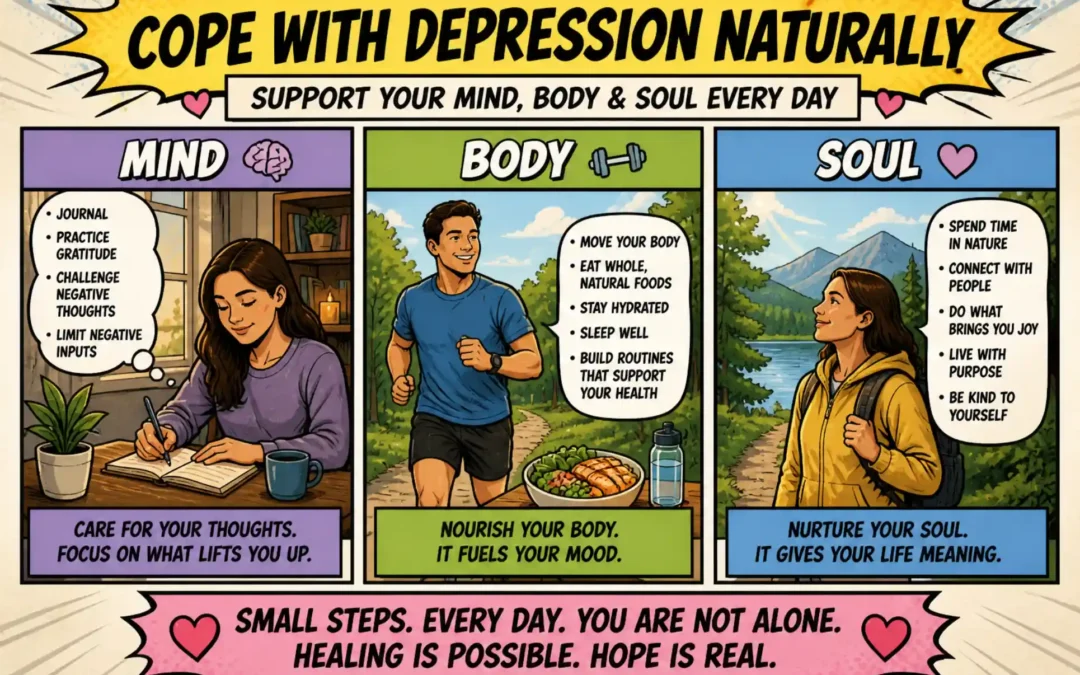
While depression can have many causes, there are powerful natural ways to support emotional healing. A holistic mental health approach recognizes that mood is deeply influenced by how we care for the body, mind, and soul. When those three areas fall out of balance, emotional suffering often grows.

When they’re supported, healing becomes more possible.

If you’re navigating depression, or helping someone who is, here are several natural ways to begin supporting recovery.

Start With the Body: Movement Matters

When depression takes hold, movement is often the last thing people feel like doing. Yet regular exercise remains one of the most effective natural ways to feel better.

Not only does physical activity help regulate hormones tied to stress, sleep, and hunger. It boosts circulation, improves energy production, increases feel-good neurotransmitters like dopamine and serotonin, and helps release tension stored in the body.

The key is not intensity. The key is consistency.

Helpful options include:

  • Walking outdoors
  • Gentle stretching
  • Running or jogging
  • Strength training
  • Dance classes
  • Cycling or spin classes

Even a 20-minute walk can create a noticeable shift in mood and mental clarity. Movement reminds the body that it is alive, capable, and still participating in life.

Fuel Your Body Well

Food has a profound effect on emotional well-being.

If we feed our bodies junk, we often feel like junk. Processed foods, sugar, excessive caffeine and nutrient-poor diets can worsen fatigue, irritability, inflammation, and mood instability.

To support recovery from depression naturally, focus on giving your body the nourishment it needs:

  • Whole fruits and vegetables
  • Lean protein sources like chicken, fish, eggs, turkey, or legumes
  • Healthy fats such as avocado, olive oil, nuts, and seeds
  • Complex carbohydrates for steady energy
  • Plenty of water throughout the day

Balanced nutrition stabilizes blood sugar, supports brain chemistry, and gives the body the raw materials it needs for emotional regulation.

Prioritize Sleep and Recovery

Poor sleep and depression often fuel one another.

When sleep is disrupted, emotional resilience decreases. Negative thoughts intensify. Energy drops. Motivation disappears.

Improving sleep hygiene can support healing in meaningful ways:

  • Go to bed and wake up at consistent times
  • Reduce screen exposure before bed
  • Keep the room cool and dark during sleep
  • Avoid caffeine late in the day
  • Build calming nighttime routines

Rest is not laziness. It’s repair.

Care for the Mind

Depression often creates distorted thinking patterns:

  • “Nothing will ever get better.”
  • “I’m failing.”
  • “No one understands.”
  • “There’s no point in trying.”

These thoughts could feel true when you’re in the middle of depression.

Practices that help support a healthy  mind include: (we can put a link to the course)

  • Move the body as this is one way to exercise the “mind muscle” (link to course)
  • Practicing gratitude, even in small ways
  • Limiting negative media consumption
  • Reading uplifting or educational material
  • Speaking with trusted friends, mentors, or Freedom from Stress counselors

Mental healing often begins when we gently challenge hopeless narratives and create space for more truthful, balanced thinking.

Download this PDF to find solutions to your mental health wellness journey.

Nurture the Soul

Depression is not only physical or mental. It often affects us  spiritually.

Many people describe depression as feeling disconnected; from themselves, from others, from meaning, from joy.

This is why spiritual and emotional nourishment matters. Learn helpful hacks and get a plan done here: www.freedomfromstresscourse.com

Supporting the soul may look like:

  • Do something that makes you smile on purpose
  • Reflecting on one’s purpose and personal values
  • Tap into aesthetics by creating art, music, or writing
  • Serving others in meaningful ways
  • Focus on environments or relationships that uplift

Nature in particular can be deeply healing. A walk outdoors, away from noise and overstimulation to create space and reconnect and find the beauty in the environment.

Reduce Inputs That Feed Depression

Sometimes healing requires not just adding healthy habits, but removing harmful influences.

Ask yourself:

  • Is there something  in my life consistently draining me?
  • Are there any habits that improve my emotional state?
  • Which relationships or environments decrease hopelessness?

This may mean reducing:

  • Social media consumption
  • Toxic relationships
  • Overwork and burnout
  • Substance use
  • Constant negative news exposure

Healing often accelerates when we stop feeding what hurts us.

Depression Is a Season, Not a Sentence

One of depression’s cruelest lies is that it convinces people they will feel this way forever.

But depression is not permanent. It’s a season, sometimes brief, sometimes long, but not forever.

Taking some of the above steps can help reduce it faster. You’ll begin to experience things like:

  • A little more energy
  • A slightly clearer mind
  • One better day
  • One less hopeless morning

Those small shifts matter.

A Holistic Path Forward

Depression is complex, and every person’s journey is different. But one truth remains:

The more we support the whole person, body, mind, and soul, the more likely healing becomes.

Exercise helps regulate the body.

Nutrition fuels the brain.

Sleep restores resilience.

Spiritual and emotional nourishment restore meaning.

No single habit is a magic cure. But together, these practices create an environment where healing can happen. If you’re struggling with depression, know this:

You are not broken.

You are not weak.

And you are not alone.

With support, intentional care, and consistent attention to the needs of your body, mind, and soul, brighter days can return. Healing may take time, but it is absolutely possible. Your life is worth that effort.

Take the first step towards true balance.

Want to talk more about this and other ways to reduce and solve stress or depression?

Book a complimentary call

Body Basics Matter: How an Anti-Inflammatory Diet Can Help Reduce Stress

Body Basics Matter: How an Anti-Inflammatory Diet Can Help Reduce Stress

When people think about stress, they often think of busy schedules, emotional burdens, or mental overwhelm. And while those factors certainly matter, many people overlook something fundamental:

The body itself can be a source of stress.

Mental illness diagnosis often discount the three pillars of body health: nutrition, sleep and exercise. Genuine holistic mental health is found at WeHelp Group, where we always rule out any hidden body health conditions in order to move on to the powerfully effective mindfulness and destress sessions in order to Reset to Rise program.

If your body is suffering from inflammation, is undernourished, exhausted, or struggling to function well, your nervous system feels that burden. Physical discomfort, poor digestion, unstable energy, chronic aches, headaches, brain fog, and hormonal imbalance all create internal strain that can quietly raise your baseline stress level every day.

That’s why body basics matter.

Sleep, exercise, hydration, and nutrition all play a major role in how we feel mentally and emotionally. But one of the most powerful, and most overlooked, places to start is with food.

More specifically: with an anti-inflammatory diet.

Why Inflammation Matters for Stress

Inflammation is the body’s natural response to injury or threat. In the short term, it’s helpful and protective.

But when inflammation becomes chronic, either due to poor diet, stress, lack of sleep, toxins, illness, or lifestyle imbalance, it can begin affecting nearly every system in the body.

Chronic inflammation has been associated with:

  • Fatigue and low energy
  • Brain fog and poor concentration
  • Digestive discomfort
  • Joint and muscle pain
  • Hormonal disruption
  • Mood swings and irritability
  • Increased anxiety and depressive symptoms

When the body is inflamed, it is working harder just to maintain balance. That internal strain can leave you feeling physically depleted, emotionally reactive and mentally foggy.

Reducing inflammation is not just about physical health. It can be a powerful way to support emotional well-being too.

Food Can Fuel Inflammation or Calm It

Many modern diets are filled with foods that promote inflammation:

  • Highly processed snacks
  • Refined sugars
  • Excess alcohol
  • Artificial additives and dyes
  • Fried foods
  • Refined vegetable oils
  • Excessive fast food

When consumed regularly these foods disrupt blood sugar, irritate the gut, and place additional stress on the immune and hormonal systems.

An anti-inflammatory diet by contrast focuses on whole, nutrient-dense foods that help the body repair, regulate and calm.

A Genuine Holistic mental health plan restores and strengthens missing factors for the whole person: body, mind and soul. If you would like a jumpstart to your routine, download our wellness checklist.

Anti-Inflammatory Foods That Support Stress Reduction

Here are several foods known to help reduce inflammation and support overall wellness.

Leafy Greens

Spinach, kale, arugula, and other greens are rich in antioxidants, magnesium, and nutrients that support nervous system health.

Berries

Blueberries, strawberries and raspberries contain powerful antioxidants that help combat oxidative stress and inflammation.

Fatty Fish

Salmon, sardines and mackerel provide omega-3 fatty acids, which support brain function and reduce inflammatory markers.

Nuts and Seeds

Walnuts, almonds, chia seeds, and flaxseeds offer healthy fats and minerals that help stabilize mood and support hormonal balance.

Olive Oil

Extra virgin olive oil contains compounds shown to reduce inflammation and support heart and brain health.

Turmeric

Turmeric contains curcumin, a natural anti-inflammatory compound with broad health benefits.

A Simple Daily Elixir for Inflammation Support

One easy and comforting way to support an anti-inflammatory lifestyle and establish a healthy foundation is with a warm wellness drink in the morning or evening.

Try this nourishing elixir:

Warm Lemon Water with Honey, Cinnamon, and Turmeric

Combine:

  • Warm water
  • Juice from fresh lemon
  • 1 teaspoon raw honey
  • ¼ teaspoon cinnamon
  • ¼ teaspoon turmeric

This simple drink provides hydration while offering ingredients traditionally valued for their anti-inflammatory and immune-supportive properties.

Read more about it at The Nutrition Watchdog.

This can become a grounding ritual that supports both body and mind.

Remember a Few Other Body Basics

While diet is powerful, food works best when paired with other foundational habits.

Sleep

Poor sleep increases inflammatory markers and heightens emotional reactivity. Rest is one of the body’s most important repair tools.

Movement

Regular exercise helps regulate inflammation, improve circulation, and support mood-regulating neurotransmitters.

Hydration

Even mild dehydration can increase fatigue, headaches, and stress sensitivity.

Healing Starts with the Basics

In our search for better mental health and lower stress, we often look for complex solutions.

But sometimes healing begins with the basics.

When you nourish your body well, reduce inflammation, move regularly, and prioritize rest, you give your system the resources it needs to function better. As physical symptoms improve, mental and emotional resilience often improve alongside them.

An anti-inflammatory diet is not about perfection or restriction. It’s about supporting the body in a way that reduces internal stress and promotes healing.

When inflammation goes down, many people notice:

  • More stable energy
  • Clearer thinking
  • Better digestion
  • Improved mood
  • Reduced physical discomfort
  • Greater emotional resilience

Stress does not only come from your circumstances.

Sometimes it comes from a body that’s asking for better support.

The good news is that with thoughtful choices, healing can begin one meal, one habit, and one day at a time.

Want to talk more about this and other ways to reduce stress?

Schedule Your Complimentary Clarity Call

Ultimately we all deserve more healing. Healing is forward progress.

Let us help you take your next step today.

Stress reduction through holistic living

Stress reduction through holistic living

Can Simple Holistic Living Lead to Increased Mental Well-Being & Stress Reduction?

In a world that moves fast and demands more, stress has quietly become a constant companion for many. A lot of times, we normalize exhaustion, brain fog, irritability, and restless sleep.

What if there was a solution to stress? True wellness is about pushing through to restore balance of body, mind and soul to experience the transformation you’re envisioning.

Paths to holistic mental health have found common purpose in medical practices and journals like Psychology Today, but they don’t encompass the effective and powerful destressing offered to qualified individuals by holistic-focused programs like those of WeHelp Group.

Real healing begins when we recognize that mental well-being and balance come from addressing the whole person:

  • Body
  • Mind
  • Soul

Not just the symptoms. Imagine less symptoms. This is the foundation of holistic mental health. Download our mental health wellness journey PDF here to sharpen your own advocacy skills on mental health. For more genuine help, please book a complimentary call with us.

Rather than masking stress or emotional struggles, holistic living seeks to understand the deeper connections between physical condition, mental clarity, and emotional well-being.

When we approach stress from this whole-person perspective, everything begins to shift.

The Body-Mind Connection

If you or someone you love is experiencing specific symptoms of mental illness, a comprehensive blood test with a competent integrative doctor is the best solution to detect underlying body health situations.
Many people are still surprised to learn how often mental health challenges have physical roots. Nutrient deficiencies, blood sugar instability, thyroid imbalances, toxin build up, chronic inflammation, bacteria and virus infections, and hormonal shifts can all contribute to anxiety, mood swings, low motivation, and difficulty concentrating. Unfortunately those symptoms are still being diagnosed as mental illnesses.

In many cases, when people are struggling emotionally, the root cause can be found in the body, sometimes identified through thorough blood testing and careful assessment of lifestyle patterns. When physical imbalances are addressed, the body calms once the whole body, including the brain is supported effectively and the mind often follows allowing mental clarity to improve.

Once this occurs, stressful emotional experiences are easily handled with freedom from stress counseling.

Nutrition as Emotional Support

Food is more than fuel; it’s information for your nervous system. Diets high in processed foods and sugar increase inflammation and stress hormones, leaving you feeling wired yet depleted. On the other hand, whole foods rich in protein, healthy fats, fiber, and micronutrients help stabilize mood and support neurotransmitter function.

When blood sugar is balanced, energy becomes steady. When the body is nourished, the mind can access calm more easily, especially with our pro tips.

Consider trying these three simple things and note the changes:

  • Prioritize protein at breakfast
  • Reduce processed snacks
  • Stay hydrated and consider enhancing electrolytes

Movement for Mental Clarity

Exercise is one of the most powerful natural stress relievers. Regular movement improves circulation, reduces cortisol, and increases feel-good neurotransmitters enhancing cognitive functions and mood like dopamine and serotonin.

Extreme workouts aren’t necessary to see benefits. Walking outdoors, gentle strength training, or stretching can all support mental clarity and emotional balance. Movement reconnects you to your body and releases stored tension that accumulates from daily pressures.

Nervous System Regulation

Holistic living also includes practical destress techniques. Time in nature and reducing screen exposure can help calm an overstimulated nervous system.

Overall body health practices help you teach your body that the environment is safe and are a pivotal part of holistic mental health. Over time, the policies become the foundation for emotional resilience. The powerful destress techniques, used by WeHelp Group Specialists, are very effective and are not traditional psychology or psychiatry, as that has shown to be ineffective with genuine mental health.

Rebuilding Daily Rhythms

Lasting overall wellness is built on body, mind and soul health routines. Consistent sleep, eating and exercise rituals lay the foundation for holistic mental health. Routine, structured recharge time, meaningful relationships, and time for reflection allow the body, mind and you, the soul, to reset. When daily rhythms support recovery instead of depletion, stress can loosen its grip.
Holistic mental health is about expanding the conversation. It recognizes that physical health, mental clarity, and emotional well-being are deeply intertwined.

When you nourish your body, move intentionally, regulate your nervous system, and create sustainable routines, life begins to feel different. Thoughts become clearer. Emotions feel manageable. Calm replaces constant overwhelm.

Through holistic living and intentional stress reduction, it is absolutely possible to restore balance and build healthier habits that support lasting wellness.

You don’t have to stay stuck in survival mode. A calmer, clearer, more grounded life is within reach.

One whole-person step at a time.

Small shifts can have a profound impact on daily stress levels. Download our wellness checklist now to jumpstart your routine.

Schedule Your Complimentary Clarity Call

How to Heal Stress Naturally: 5 Steps to Freedom from Stress

How to Heal Stress Naturally: 5 Steps to Freedom from Stress

How to Heal Stress Naturally: 5 Steps to Freedom from Stress

Stress has become so common that many people no longer recognize it as something that can be healed, only managed. We push through exhaustion, ignore tension, and normalize feeling overwhelmed. But stress isn’t just a mental experience. It lives in the body, shapes our habits, and quietly drains our sense of peace.

If you’re searching for how to heal stress naturally, the first step is understanding this simple truth:

“True mental health and overall wellness begins with body health. Once your body is healthy, your mind and soul can heal too, unlocking clarity, calm, and confidence. When all three, body, mind, and soul are aligned, life starts to bloom again. You don’t have to keep spiraling or feeling stuck. There is a better way.”

Healing stress doesn’t require drastic changes. It requires intentional, supportive steps that bring you back into balance. Here are five simple, natural ways to begin.

1. Nourish Your Body with Supportive Food

One of the most overlooked signs your body is holding stress is unstable energy, crashes, cravings, and irritability. Highly processed foods, excess sugar, and caffeine spikes keep the nervous system in a constant state of alert.

To heal stress naturally, focus on real, nutritional foods:

  • Protein-rich meals to stabilize blood sugar
  • Healthy fats to support brain function
  • Whole fruits and vegetables for minerals that calm the nervous system

Eating well isn’t about perfection. It’s about sending your body the message that it’s supported, not under attack.

2. Move in a Way That Releases, Not Depletes

Exercise doesn’t need to be intense to be effective. In fact, gentle, consistent movement often does more for stress than high-pressure workouts.

Walking, stretching, yoga, or light strength training helps release stored tension and signals to the body that the environment is safe. Movement becomes healing when it reconnects you with your physical self, helping you breathe deeper, stand taller, and feel present again.

3. Learn to Regulate Your Nervous System

Stress isn’t just in your thoughts, it’s in your physiology. Shallow breathing, tight muscles, and constant alertness are clear signs your body is holding stress.

Simple practices like slow breathing, longer exhales, or pausing to notice your surroundings can shift your body out of fight-or-flight mode. Creating these moments of awareness helps answer the question of how to feel grounded again when life feels overwhelming.

Restoring the natural calm of these seemingly automatic body systems can be within your control.

4. Create Rhythms of Rest and Recovery

Rest is not laziness; rest is repair. Chronic stress thrives when there is no pause.

Set small, daily boundaries:

  • Consistent sleep and wake times
  • Short breaks away from screens
  • Quiet moments with no agenda

These rhythms teach your body that it doesn’t have to stay on guard all the time.

5. Reconnect with Meaning and Inner Alignment

Stress often intensifies when life feels disconnected or empty. Healing requires more than symptom relief, it requires purpose.  When alignment returns, clarity follows.

Take a walk, look at the things in your environment, both near and far; walk until you find yourself centered and more in the moment.

Heal & Restore

Healing stress naturally is not about fixing what’s broken, it’s about restoring what’s been neglected. With steady, compassionate steps, you can calm your body, clear your mind and rediscover a grounded sense of confidence.

There is a better way and it starts with caring for yourself as a whole person.

WeHelp offers a complimentary Clarity Call, where one of our trained specialists will go over areas of your life and discuss potential programs to create a pathway to truly get you the relief you deserve.

Take the first step towards truly balancing your mind, body and soul!

Schedule Your Complimentary Clarity Call

Related Articles

Stress reduction through holistic living

Stress reduction through holistic living

Can Simple Holistic Living Lead to Increased Mental Well-Being & Stress Reduction? In a world that moves fast and demands more, stress has quietly become a constant companion for many. A lot of times, we normalize exhaustion, brain fog, irritability, and restless...